
Memory bandwidth may be the most overlooked AI performance metric
Intel Xeon first to market with 8000 MT/s RDIMM support underscores why data movement is becoming a competitive differentiator.
Opinion: AI performance depends on more than accelerators
In the AI era, performance is often associated with accelerators, cluster scale and model size. But as AI workloads become more complex, another factor is gaining importance: how efficiently the platform can move data. Memory bandwidth can determine whether CPUs, accelerators and storage work as a balanced system or spend valuable cycles waiting for data.
Memory bandwidth is becoming a strategic design point
Modern AI host CPUs must support larger models, denser GPU configurations and increasingly data-intensive pipelines. Memory performance is therefore becoming a critical part of infrastructure design.
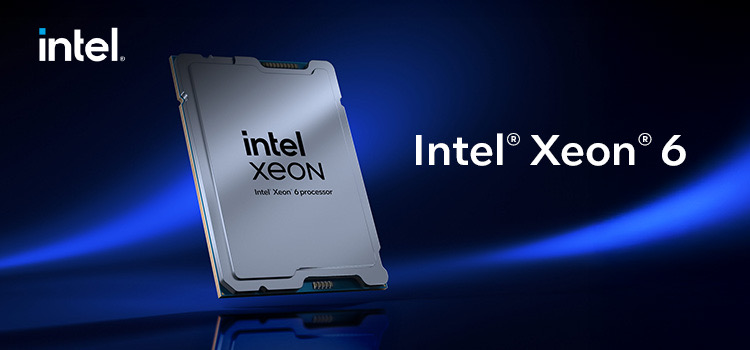
Intel continues to advance memory performance with the Intel Xeon 6 platform. Intel Xeon 6700P is planned to support 1DPC 8000 MT/s RDIMM functionality on select SKUs, delivering:
- 25% higher memory speed compared with current 6400 MT/s RDIMMs
- 6% lower memory latency
- Up to 20% more total memory bandwidth compared with 6400 MT/s RDIMM deployments¹
With this enhancement, Intel Xeon 6+ and Intel Xeon 6 are positioned to bring 8000 MT/s RDIMM support to market, a first among mainstream server platforms via UPLR release and BIOS update on Intel Xeon 6. Production availability is targeted for August–September 2026.
The gains show up where infrastructure leaders feel pressure
Higher memory bandwidth can deliver performance improvements across a broad range of workloads, with the strongest gains in applications that are particularly sensitive to memory bandwidth. By moving data more efficiently, 8000 MT/s RDIMM technology can help keep CPUs and AI accelerators supplied with data and reduce performance losses caused by memory bottlenecks.
The principle is simple: balanced systems win. Faster accelerators and higher core counts can only deliver their full potential when the rest of the platform can efficiently feed data to them and scale alongside them.
A roadmap for what comes next
Intel plans to enable Gen 2 MRDIMM support at up to 8800 MT/s for Intel Xeon 6900P processors in Q1 2027, extending high-bandwidth memory capabilities to platforms with 72 to 128 cores and supporting continued scaling across AI, analytics and HPC workloads.