
From retail displays to retail intelligence infrastructure
How Prestigio Solutions, an ASBIS Group own brand of technological solutions for business and education, and DISPL, an ASBIS-backed startup, are helping brands measure real-world customer engagement in physical retail
Physical retail still suffers from a visibility problem. Brands know what sells, but rarely understand what actually captures customer attention in-store. Traditional retail metrics: sales reports, foot traffic estimates, and periodic store visits, provide only partial visibility into customer behavior. They show transactions, but not engagement. They cannot explain why one product zone attracts attention while another gets ignored.
At the same time, digital channels have conditioned brands to expect measurable performance everywhere: impressions, engagement, dwell time, audience segmentation, and conversion insights are standard in online environments. Physical retail, however, has remained largely unmeasurable.
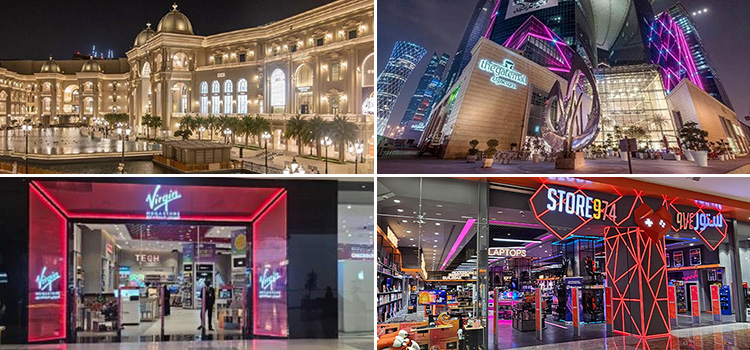
Recent pilot deployments across Virgin Megastore and E-City locations in the UAE explored how AI-powered analytics and edge infrastructure can begin closing that gap. Together, Prestigio Solutions and DISPL are building an infrastructure layer that transforms physical retail environments into measurable, data-driven engagement spaces.
Why retail needs measurable engagement
What problem were you trying to solve?
Sergei Galeev, CEO DISPL: Retail environments generate enormous amounts of customer interaction data, but most of it remains invisible. Retailers can measure sales, but they rarely understand attention, engagement, or behavioral patterns around specific products and brand zones. This creates a major gap between physical retail and digital commerce. Online, brands can optimize campaigns in real time. Offline, decisions are often still based on assumptions, visual observations, or delayed sales reporting. DISPL was designed to bridge that gap by enabling real-time audience analytics directly inside retail spaces.
Aliaksandr Tsikhanovich, BDM at Prestigio Solutions: One of the biggest barriers to retail analytics adoption has traditionally been infrastructure complexity. Many retailers assume that deploying intelligent retail systems requires rebuilding store environments, introducing heavy IT integration, or replacing existing hardware. Our goal was to simplify deployment and create an edge-ready infrastructure layer that can operate independently within existing retail environments. The combination of Prestigio Solutions hardware infrastructure and DISPL analytics software enables fast deployment without disrupting store operations.
Building measurable retail infrastructure
The solution combines two integrated layers. DISPL provides the intelligence layer:
- AI-powered visitor analytics,
- audience engagement measurement,
- targeted content delivery,
- centralized content management,
- and real-time retail insights.
Prestigio Solutions provides the infrastructure layer:
- edge computing hardware,
- deployment architecture,
- connectivity,
- and operational reliability required for scalable retail implementation.
The hardware setup includes the DISPL Box powered by Prestigio Solutions infrastructure, featuring a Mini PC, DISPL Sensor, and network connectivity designed for autonomous deployment inside retail environments. The system processes audience analytics directly on-device using edge computing. No personal data is stored or transmitted, supporting compliance with GDPR, CCPA, LGPD, and the EU AI Act. This allows retailers and brands to deploy measurable retail intelligence without requiring major infrastructure changes.
Why the UAE pilots mattered
The pilot deployments were launched across premium retail locations in the UAE, including Virgin Megastore at Mall of the Emirates and E-City at Dubai Mall. These environments provided an opportunity to test how AI-powered analytics perform in real-world, high-traffic retail conditions.
Three pilot deployments were implemented:
- Targus Brand Wall at Virgin Megastore,
- MOZA Racing Simulator Zone at Virgin Megastore,
- Logitech PW Wall at E-City Dubai Mall.
Each deployment explored different applications of measurable retail infrastructure.
What the data revealed
MOZA Brand Table – Virgin Megastore, Mall of the Emirates
The MOZA deployment featured a full racing simulation ecosystem integrated with DISPL audience analytics and content management capabilities.
Over an 18-day period:
- 2,700 visitors interacted with the installation,
- engagement rate reached 31%,
- average attention time approached 30 seconds,
- and visitors returned to the stand an average of three times.
More importantly, the deployment demonstrated that physical retail engagement can be measured with a level of precision previously associated mainly with digital channels.
Brands could now identify:
- how long visitors engaged,
- how frequently they returned,
- and which retail experiences generated sustained attention.
Logitech PW Wall — E-City Dubai Mall
One of the most significant findings emerged from the Logitech deployment. Unlike traditional digital signage projects, this installation operated in analytics-only mode without digital screens. The environment focused purely on visitor measurement and behavioral analysis. Over just four days:
- the stand recorded 317 visitors,
- a 32% engagement rate,
- nearly 29 seconds of average attention time,
- and 3.5x repeat visits.
This demonstrated that measurable retail intelligence does not require full digital signage deployment. Retailers can begin collecting actionable engagement data using lightweight infrastructure and scale further over time. For many enterprise environments, this dramatically lowers the barrier to adoption.
Beyond digital signage
What makes this approach different from traditional retail displays?
Sergei Galeev, CEO DISPL: Traditional displays are largely passive. They attract attention visually, but they provide little measurable insight into audience behavior. DISPL transforms retail displays into responsive engagement environments capable of measuring: dwell time, audience demographics, engagement depth, repeat interactions, and visitor behavior patterns in real time. This allows brands to optimize retail environments using measurable data rather than assumptions.
Aliaksandr Tsikhanovich, BDM at Prestigio Solutions: The infrastructure layer is equally important. Retail environments require systems that are stable, scalable, and easy to deploy across multiple locations. Edge computing allows analytics processing to happen directly inside the retail environment without relying heavily on centralized infrastructure. This architecture simplifies deployment while supporting real-time responsiveness and privacy-safe processing.
Connecting offline and online retail intelligence
The Targus deployment highlighted another important aspect of measurable retail infrastructure: omnichannel intelligence. Alongside the in-store deployment, ASBIS developed enriched digital product content for the Targus collection on the Virgin Megastore online platform, including detailed descriptions, visual galleries, and enhanced merchandising assets. This created a connected retail experience between physical engagement and digital discovery. In-store analytics help brands understand which audiences interact with products in physical environments. Online merchandising can then be optimized to support those same customer segments after the store visit. The result is a more connected retail intelligence ecosystem across both offline and online channels.
What comes next
Physical retail is entering a measurable era. As brands increasingly expect digital-level visibility inside physical environments, retail spaces are evolving from static merchandising environments into intelligent engagement infrastructure. The combination of DISPL’s analytics platform and Prestigio Solutions’ edge-ready deployment infrastructure demonstrates how retailers can begin building this capability today incrementally, scalably, and without major operational disruption. The UAE pilot deployments represent an early step toward a broader shift: from passive retail displays to measurable retail intelligence infrastructure.