
Time-to-capacity: why infrastructure deployment speed is becoming a key competitive metric for cloud providers
AI infrastructure investment continues to accelerate. IDC expects worldwide spending to reach $497 billion in 2026, following a record $318 billion in 2025, with the market projected to exceed $1 trillion by 2029.
At the same time, cloud providers are under growing pressure to expand capacity faster. Supply, rather than demand, has become the primary constraint in today’s server market, as shortages of key components continue to limit deployments despite strong order pipelines.
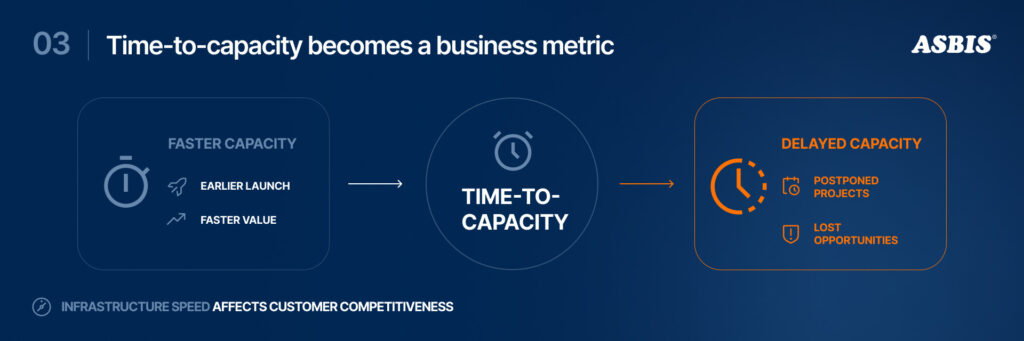
For cloud providers, this changes the way infrastructure is measured. Alongside price, availability, and SLA performance, time-to-capacity is becoming a metric that directly affects how quickly new AI services can be launched and deliver business value.
To better understand why deployment speed has become a strategic advantage for cloud providers, we spoke with Marek Horyl, Vice President of IT Products at ASBIS, about the challenges of scaling AI infrastructure and the factors that determine how quickly new capacity reaches production.
AI is changing infrastructure requirements
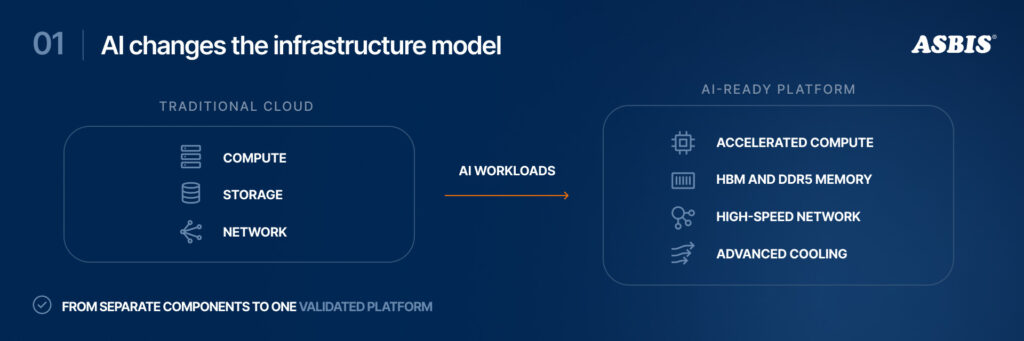
Cloud infrastructure was originally designed to support general-purpose enterprise workloads. AI is changing that foundation, introducing new performance requirements that affect every layer of modern data center architecture.
“Artificial intelligence is fundamentally changing how cloud infrastructure is designed and deployed. Traditional cloud environments were built primarily around general-purpose compute, storage and networking. AI introduces a completely different set of requirements.”
Hyperscalers continue to invest billions of dollars in expanding capacity, while enterprise customers are moving AI workloads from pilot projects into production. As a result, demand now extends beyond servers to the entire supporting ecosystem, including networking, enterprise SSDs, DDR5 memory, liquid cooling, and power infrastructure.
Infrastructure planning has become significantly more complex. Cloud providers can no longer optimize individual components independently. Instead, they need validated platforms that deliver predictable performance, scalability, and energy efficiency.
Execution has become the primary challenge
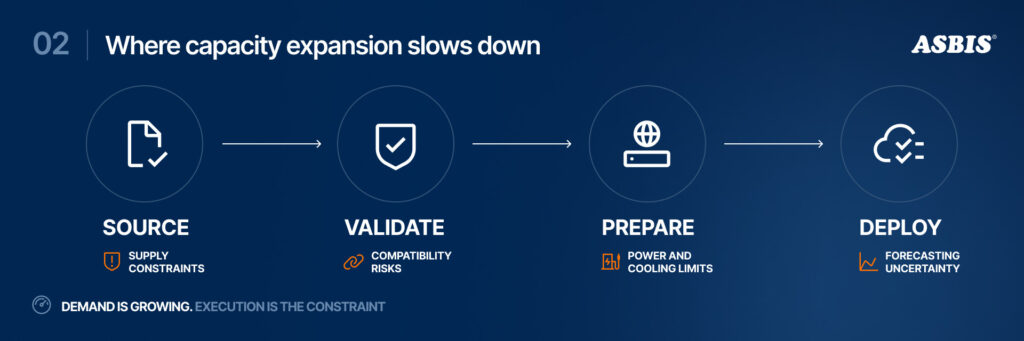
Expanding cloud capacity is no longer limited by investment alone. Even with strong demand and committed budgets, providers must navigate a growing number of dependencies before new infrastructure can be brought online.
“The biggest challenge is no longer demand. It is execution. While investment in AI infrastructure continues to accelerate, the supply chain remains under pressure. Advanced GPUs, HBM memory, enterprise SSDs and high-speed networking components continue to experience allocation constraints. At the same time, power availability, cooling capacity and construction timelines have become limiting factors for many new data center projects.
Another challenge is infrastructure validation. AI clusters require carefully tested combinations of servers, accelerators, networking and storage. Replacing one component with another is often not straightforward, and compatibility testing can significantly extend deployment timelines.
Finally, forecasting has become increasingly difficult. AI projects often scale much faster than originally planned, making long-term procurement and manufacturing planning more challenging for the entire supply chain.”
Time-to-capacity is becoming a competitive advantage
For cloud providers, adding capacity is no longer only an infrastructure challenge. It directly affects how quickly customers can launch new products, expand AI services, and respond to business opportunities.
“Organizations deploying AI applications are often under significant competitive pressure. Whether developing large language models, implementing enterprise AI or delivering GPU-as-a-Service, customers cannot afford to wait several months for additional capacity.
Cloud providers that can deploy new infrastructure faster gain a significant competitive advantage. Time-to-capacity is becoming as important as traditional metrics such as price, availability or SLA performance because it directly affects how quickly customers can launch new services and generate business value. In the AI economy, infrastructure deployment speed increasingly translates into business competitiveness.”
Preparation determines deployment speed
The challenges of expanding capacity are well understood. The next question is how cloud providers can reduce delays without compromising reliability, compatibility, or long-term scalability.
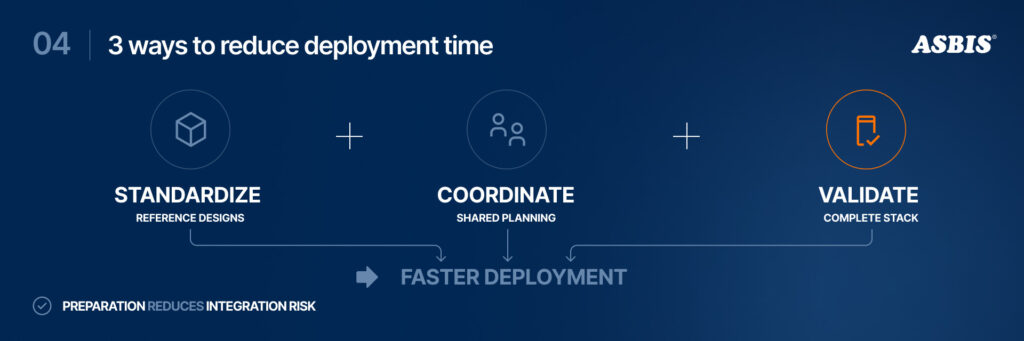
“Preparation is becoming more important than execution itself. Leading cloud providers increasingly standardize their infrastructure architectures and rely on validated reference designs developed together with technology vendors. This significantly reduces integration risks and shortens deployment cycles.
Close collaboration across the entire supply chain is equally important. Vendors, distributors, system integrators and cloud providers need to work with shared forecasts, synchronized delivery schedules and common technical roadmaps rather than treating procurement as isolated transactions.
Equally important is working with partners that understand the complete infrastructure stack, from compute and storage to networking, firmware compatibility and lifecycle management. This holistic approach minimizes unexpected delays during deployment.”
Deployment speed will become a long-term differentiator
The current wave of AI investment is changing how cloud providers plan for growth. As infrastructure requirements continue to evolve, the ability to scale efficiently will become a defining factor in long-term competitiveness.
“I believe deployment speed will become one of the key competitive differentiators across the cloud industry.
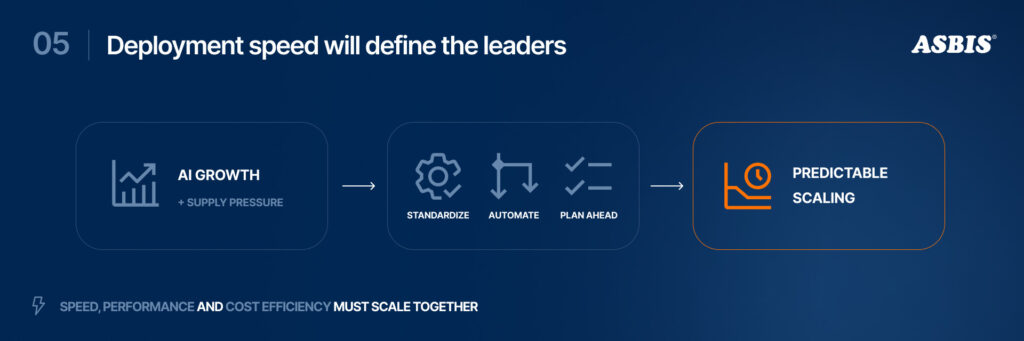
Demand for AI infrastructure will continue to grow significantly as enterprise AI adoption accelerates and new inference workloads move into production. At the same time, cloud providers will increasingly focus on improving operational efficiency, automation and standardized infrastructure platforms to reduce deployment time.
Although semiconductor manufacturing capacity will gradually improve, demand is expected to remain exceptionally strong. Therefore, efficient supply chain management, long-term procurement planning and strategic partnerships will become even more critical.
The providers capable of scaling infrastructure predictably, while maintaining performance and cost efficiency, will be in the strongest competitive position.”
The role of distribution is changing
Building AI infrastructure has become a collaborative effort. Delivering new capacity depends on how effectively technology vendors, integrators, and cloud providers work together throughout the project lifecycle.
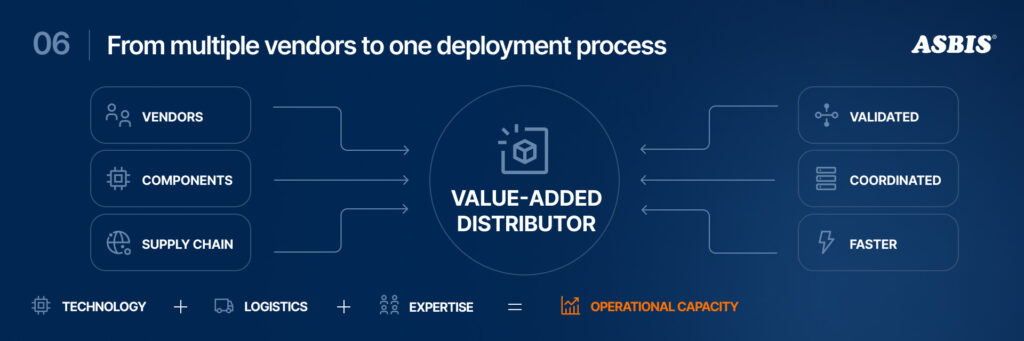
“The role of a value-added distributor has evolved significantly over the past few years. Today, distribution is no longer about moving products. It is about enabling technology deployment.
A value-added distributor coordinates multiple technology vendors, manages component availability, synchronizes logistics, supports solution validation and helps partners navigate increasingly complex supply chains. This becomes particularly important in AI infrastructure projects where dozens of technologies must work together seamlessly.
At ASBIS, we increasingly act as an orchestrator across the ecosystem. Through long-standing partnerships with leading technology vendors and our presence across more than 30 countries in EMEA, we help customers and cloud providers secure critical components, coordinate deliveries and accelerate deployment of enterprise infrastructure.
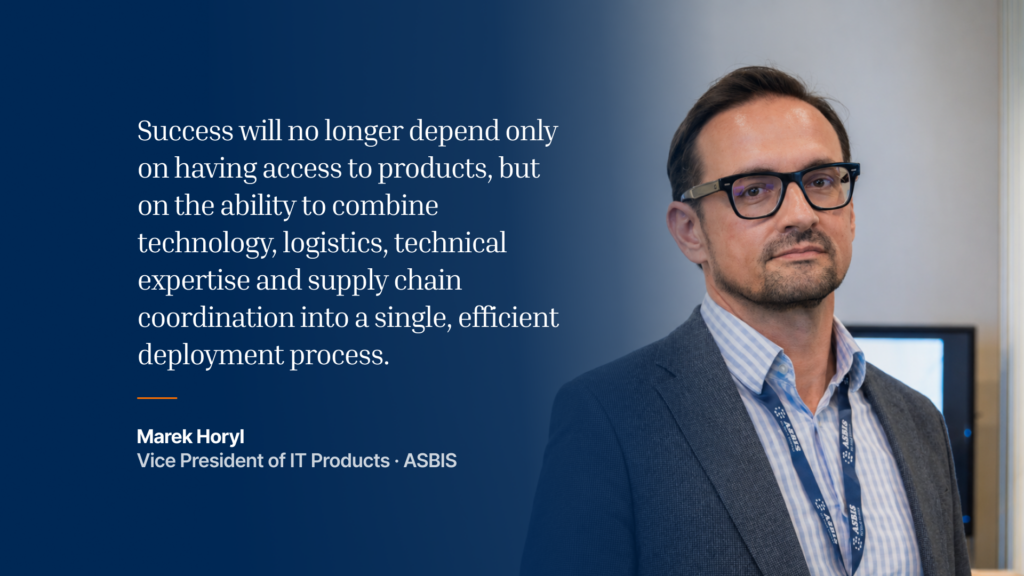
As AI projects continue to grow in complexity, distributors will play an increasingly strategic role. Success will no longer depend only on having access to products, but on the ability to combine technology, logistics, technical expertise and supply chain coordination into a single, efficient deployment process.”